International use of the U.S. dollar

The United States dollar was established as the world’s foremost reserve currency by the Bretton Woods Agreement of 1944. It claimed this status from sterling after the devastation of two world wars and the massive spending of the United Kingdom’s gold reserves. Despite all links to gold being severed in 1971, the dollar continues to be the world’s foremost reserve currency. Furthermore, the Bretton Woods Agreement also set up the global post-war monetary system by setting up rules, institutions and procedures for conducting international trade and accessing the global capital markets using the US dollar.
The US dollar is widely held by central banks, foreign companies and private individuals worldwide, in the form of eurodollar foreign deposit accounts (not to be confused with the euro), as well as in the form of US$100 notes, an estimated 75% of which are held overseas.[1] The US dollar is predominantly the standard currency unit in which goods are quoted and traded, and with which payments are settled in, in the global commodity markets.[2]



The US dollar is also the official currency in several countries and the de facto currency in many others, with Federal Reserve Notes (and, in a few cases, US coins) used in circulation.
The monetary policy of the United States is conducted by the Federal Reserve System, which acts as the nation’s central bank.
Ascendancy
The primary currency used for trade around the world, between Europe, Asia and the Americas had historically been the Spanish-American silver dollar, which created a global silver standard system from the 16th to 19th centuries, due to abundant silver supplies in Spanish America.[3] The US dollar itself was derived from this coin. The Spanish dollar was later displaced by sterling in the advent of the international gold standard in the last quarter of the 19th century.
The US dollar began to displace sterling as international reserve currency from the 1920s since it emerged from the First World War relatively unscathed and since the United States was a significant recipient of wartime gold inflows. [4] After the US emerged as an even stronger global superpower during the Second World War, the Bretton Woods Agreement of 1944 established the post-war international monetary system, with the US dollar ascending to become the world’s primary reserve currency for international trade, and the only post-war currency linked to gold at $35 per troy ounce.[5] Despite all links to gold being severed in 1971, the dollar continues to play this role to this day.
International reserve currency
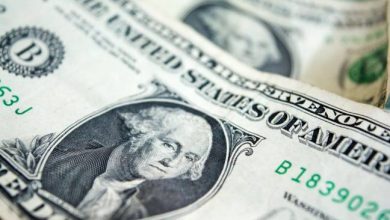
The US 100-dollar bill, the world’s most recognizable reserve currency in physical form
Main article: Reserve currency
The US dollar is joined by the world’s other major currencies – the euro, sterling, Japanese yen and Chinese renminbi – in the currency basket of the Special drawing rights of the International Monetary Fund. Central banks worldwide have huge reserves of US dollars in their holdings, and are significant buyers of US treasury bills and notes.[6]
Foreign companies, entities and private individuals hold US dollars in foreign deposit accounts called eurodollars (not to be confused with the euro), which are outside the jurisdiction of the Federal Reserve System. Private individuals also hold dollars outside the banking system mostly in the form of US$100 notes, of which 75% of its supply are held overseas.
The United States Department of the Treasury exercises considerable oversight over the SWIFT financial transfers network,[7] and consequently has a huge sway on the global financial transactions systems, with the ability to impose sanctions on foreign entities and individuals.[8]
Economist Paul Samuelson and others (including, at his death, Milton Friedman) have maintained that the overseas demand for dollars allows the United States to maintain persistent trade deficits without causing the value of the currency to depreciate or the flow of trade to readjust. But Samuelson stated in 2005 that at some uncertain future period these pressures would precipitate a run against the US dollar with serious global financial consequences.[9]
In August 2007, two scholars affiliated with the government of the People’s Republic of China threatened to sell its substantial reserves in American dollars in response to American legislative discussion of trade sanctions designed to revalue the Chinese yuan.[10] The Chinese government denied that selling dollar-denominated assets would be an official policy in the foreseeable future. India and Russia have also announced moves to diversify reserves away from the US dollar.[11]
After the euro’s share of global official foreign exchange reserves approached 25% as of year-end 2006 (vs 65% for the US dollar; see table in Reserve currency#Global currency reserves), former Federal Reserve Chairman Alan Greenspan said in September 2007 that it is “absolutely conceivable that the euro will replace the dollar as reserve currency, or will be traded as an equally important reserve currency”.[12] As of 2021, however, none of this has come to fruition due to the European debt crisis which engulfed the PIIGS countries from 2009-2014. Instead the euro’s stability and future existence was put into doubt, which reduced its share of global reserves to 19% as of year-end 2015 (vs 66% for USD). As of year-end 2020 these figures stand at 21% for EUR and 59% for USD.
The percental composition of currencies of official fo